
01
Autonomic Regulation
Restoring physiological stability by reducing chronic alarm, shutdown, and overactivation in the stress-response system.

Hranicky NeuroEpigenetics Longevity Protocol
Professional programs from Dr. Janet Hranicky, M.D., Ph.D., integrating psychoneuroimmunology, autonomic regulation, neuroepigenetic adaptation, metabolic lifestyle medicine, and immune surveillance into a disciplined clinical framework.
Creator of the Pleasure-Freeze Theory
Pioneer in psychoneuroimmunology
Protocol systems for clinical resilience
35+ years
Clinical refinement and program development
1986
Pleasure-Freeze theory doctoral dissertation
5 protocols
Unified neuroepigenetic longevity architecture
The clinical premise
A clinical framework for restoring biological resilience across stress physiology, metabolic terrain, immune regulation, and neuroepigenetic adaptation.
01
Restoring physiological stability by reducing chronic alarm, shutdown, and overactivation in the stress-response system.
02
Supporting cellular energy, glucose regulation, endocrine rhythm, and mitochondrial vitality as foundations for recovery and longevity.
03
Addressing the biological imprint of repeated stress signals, belief patterns, threat appraisal, and learned survival responses.
Protocol portfolio
Each pathway translates the same clinical foundation into a focused program for stress physiology, metabolic regulation, immune resilience, cardiovascular vitality, and long-term adaptation.
A structured resilience framework for chronic stress physiology, metabolic dysregulation, immune surveillance, and recovery orientation.
A precision vitality pathway for vascular health, circulation, endurance, inflammation regulation, and heart-brain coherence.
A regulation-centered protocol for immune signaling, cellular immunity, inflammatory load, and resilient longevity.
A metabolic lifestyle medicine program focused on glucose management, endocrine balance, mitochondrial energy, and durable regulation.
Signature clinical models
Dr. Hranicky's work gives patients, families, and practitioners a clear vocabulary for patterns that are often felt in the body long before they are named in clinical conversation.
A protective suppression of joy, desire, motivation, and felt vitality that can emerge when the nervous system learns that aliveness is unsafe.
Names protective vitality suppression
Connects threat learning with biological restraint
Frames recovery as renewed adaptive signaling
Names the learned inhibition of pleasure, desire, motivation, and aliveness when the system interprets vitality as unsafe.
Clarifies shutdown patterns that can appear as fatigue, disengagement, emotional flatness, or reduced future orientation.
Supports a protocol response built around tolerable signals of safety, agency, meaning, and regulated engagement.

Temporal load model
02
A clinical lens for the accumulated load of loss, conflict, overload, financial strain, and identity disruption before diagnosis.
Names the sustained period of converging losses, pressure, conflict, identity strain, and overload that can precede clinical crisis.
Helps practitioners separate one isolated stressor from an accumulated physiological load pattern.
Guides assessment toward timing, intensity, recovery capacity, relational load, and the body systems most affected.

Autonomic response map
03
Fight, flight, freeze, fawn, flood, and fatigue as distinct autonomic configurations with different regulatory needs.
Names distinct survival configurations instead of treating stress as one generic state.
Improves precision by matching intervention style to the active response pattern rather than forcing one universal tool.
Supports education around regulation, pacing, relational repair, and recovery signals appropriate to each state.

Coherence model
04
A communication model for restoring coherent signaling across stress physiology, immune function, behavior, and meaning.
Names the difference between scattered internal alarm and clear biological communication.
Gives patients and practitioners a practical way to evaluate whether inputs are regulating or amplifying stress load.
Frames protocol work as repeated coherent signaling across behavior, physiology, identity, and relational environment.
Clinical science briefings
Start with the broad biochemical pathway, then move into the protocol architecture behind cognitive signal, biological transduction, immune readiness, and behavioral adherence.
Episode 01
3 min 53 secA concise orientation to psychoneuroimmunology, stress physiology, expectation, agency, and the adjunctive-care boundary.
Brain-immune communication
Stress and inflammatory load
Agency as clinical support
Episode 02
7 min 30 secA deeper mechanism briefing on cognitive inputs, cortisol, immune activity, inflammatory markers, adherence, and behavioral loops.
Cortisol and recovery capacity
Immune surveillance and NK activity
Self-efficacy and treatment adherence
A clear introduction to psychoneuroimmunology and the two-way communication between stress physiology, endocrine signaling, and immune activity.
A responsible look at how fear, nocebo effects, inflammatory messaging, and chronic alarm can add physiological burden during illness.
A careful distinction between supportive psychological care and medical treatment, with agency, hope, and confidence framed as resilience resources.
Educational content only. Psychological and behavioral support may complement care, but it does not replace diagnosis, emergency care, oncology treatment, cardiology care, or individualized medical guidance from a licensed treating clinician.
In-person and professional programs
Dr. Hranicky's current protocol architecture is not a standalone concept. It extends a long professional lineage across cancer education, psychoneuroimmunology, patient and family support, professional training, and comprehensive wellness programming.
Cancer patients and survivors seeking serious adjunctive resilience support
Families and caregivers navigating fear, role strain, communication, and fatigue
Clinicians and integrative practitioners who need disciplined program models
Wellness centers and health-focused leaders building structured education pathways
Documented program lineage
Public references support the continuity of this work across education, clinical support, and wellness program settings.
Public biography traces Dr. Hranicky's health-care delivery work back to 1972, before her later cancer-focused program development.
Source: American Health Institute
Her public biography describes three decades of work with O. Carl Simonton, M.D. and the Simonton Cancer Center program lineage.
Source: Hranicky M.D., Ph.D.
Founder and President of The American Health Institute, with program work spanning patient services and professional education.
Source: American Health Institute
Hippocrates Wellness identifies Dr. Hranicky as co-director of the CCWP and names American Health Institute as an alliance partner.
Source: Hippocrates Wellness
Professional trainings for practitioners who need rigorous language, teachable models, and clinically responsible implementation tools.
Structured pathways for resilience, communication, identity repair, daily regulation, and serious adjunctive support.
Focused in-person experiences for education, emotional regulation, lifestyle structure, family clarity, and recovery orientation.
Program architecture, sequencing, facilitation language, and delivery safeguards for clinical and wellness organizations.
Manuscript foundation
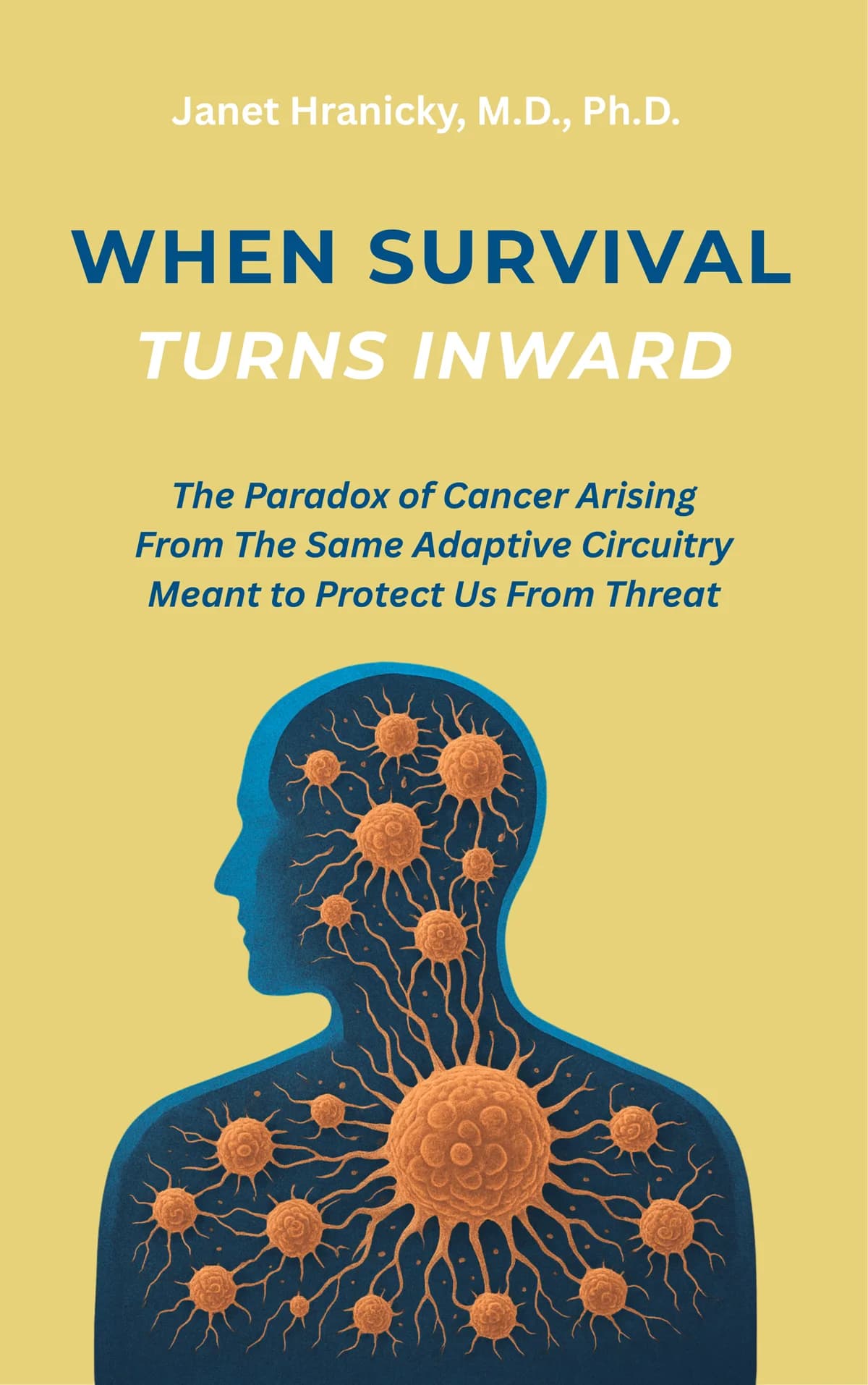
When Survival Turns Inward
Book and theory foundation
When Survival Turns Inward is the written bridge between Dr. Hranicky's Pleasure-Freeze theory and the modern protocol portfolio. The manuscript frames a central paradox: adaptive circuitry designed to protect against threat can, under sustained physiological load, become organized against vitality, regulation, and repair.
The Paradox of Cancer Arising From The Same Adaptive Circuitry Meant to Protect Us From Threat
Frames protection, threat appraisal, and survival physiology as systems that can become chronically organized under sustained load.
Extends the original theory into a broader language for vitality suppression, shutdown, identity strain, and biological restraint.
Connects the written framework to clinical education, patient programs, and neuroepigenetic protocol architecture.
Clinical visual library
Browse Dr. Hranicky's educational infographics by subject. Every visual is presented without cropping and opens full-screen with zoom controls for close reading.
These visuals present educational and conceptual frameworks. They do not establish individual disease causation or replace diagnosis, treatment, or guidance from a licensed treating clinician.
Showing 9 of 19 visuals
Select any image to open the complete infographic.
Program inquiry
Share the audience, setting, timing, and intended format. The inquiry path is designed to clarify fit, clinical boundaries, and the level of structure required before next-step planning.
Appropriate inquiries
The form is for program scope and scheduling, not medical questions or personal health details.
Structured support, education, regulation practices, family clarity, and recovery orientation.
Professional language, teachable models, implementation safeguards, and training formats.
In-person or structured program pathways with defined rhythm, scope, and support needs.
Organizational collaborations, speaking requests, licensing conversations, or interviews.
01
Clarify audience, setting, timeline, and requested format.
02
Separate education, support, and clinical boundaries before planning.
03
Identify materials, sequence, facilitation needs, and next conversation.
Educational and supportive programs are not a substitute for diagnosis, emergency care, oncology treatment, cardiology care, or individualized medical advice from a licensed treating clinician.


